
"cold-resistant coffee"
220 article(s) found

Description of Flavor and Taste of Fine Coffee beans in Lazimus Manor, Colombia
Colombia has beautiful mountains and rivers, beautiful scenery, pleasant climate, spring all year round, fresh air and refreshing air. Colombia's mild climate, humid air, and diverse climate make it a harvest season all year round, with different kinds of coffee ripening at different times. What they grow is Arabica coffee beans of unique quality, and the coffee made from this coffee bean has a strong flavor.

Introduction to the characteristics of Coffee Flavor varieties in Santa Rita Manor, Colombia
The pure taste of Colombian coffee, in addition to the natural environment with the most favorable conditions for coffee growth, is inseparable from the hard work of local growers. In Colombia, coffee cultivation has reached 1.07 million hectares, there are about 302000 coffee plantations in the country, and 30 to 40 per cent of the rural population depends directly on coffee production. There are many farms in Colombia, but

Indonesian Musk Coffee (Kopi Luwak)
Most friends who like coffee are familiar with the name "civet". On the one hand, it is its "craftsmanship", and the other is its price, which seems to cast a mysterious veil over the civet coffee. Let the world, let many friends who love coffee are difficult to see in person.

What is a premium Arabica coffee bean?| How's the Arabica coffee? How's the flavor?
Professional coffee knowledge exchange For more coffee bean information, please pay attention to Coffee Workshop (Weixin Official Accounts cafe_style). The three native species are Arabica, Robusta and Liberica respectively. Arabica production ranks first, accounting for about 60 - 70% of the world's coffee production. There are Bourbon, Tibica and other sub-varieties. Robusta accounts for about 30 - 40% of the world's coffee production

Katim coffee beans suitable for which baking degree flavor description taste manor variety introduction
New World (also known as Mondonovo) is a hybrid of bourbon and Tibica, which first appeared in the 1940s and is still widely welcomed by Latin American coffee producers. Its disease resistance and yield are better than bourbon and Tibika, but at the cost of insufficient flavor complexity. Pacamara (English name Pacam)

Introduction to the regional treatment method of Colombian coffee bean flavor description, grinding scale manor production
Arabica species (scientific name Coffee Arabica) have to be mentioned in Colombian coffee species. Arabica coffee trees grow between 900m and 2000 m above sea level; they are hardy, and the suitable growth temperature is 1524 ℃; they need more humidity, and the annual rainfall is not less than 1500 ml. At the same time, they also require higher cultivation techniques and conditions. So you can handle it now.

Kinds of coffee, all kinds of coffee beans.
Let's talk about the types of coffee: there are four kinds of coffee trees in the world, but the coffee we drink now is mainly the fruit of two kinds of coffee trees, one is Arabica, the other is Robasta. Coffee trees in Arabica are not easy to grow, many are on high-altitude slopes, and picking needs to be done manually. But it is better to have a balanced taste and less caffeine.

Flavor description of Colombian Santa Rita Coffee introduction to the method of Variety treatment in Grinding scale production area
Columbia Santa Rita Coffee Flavor description Grinding scale production area Variety treatment introduction Arabica species (scientific name Coffee Arabica) have to be mentioned in Colombian coffee species. Arabica coffee trees grow between 900m and 2000 m above sea level; they are hardy, and the suitable growth temperature is 1524 ℃; they need more humidity, and the annual rainfall is not less than 1500 ml.
Indonesian civet coffee (Kopi Luwak) Kopi Luwak
Most coffee lovers are familiar with the name civet, because of its craftsmanship and price, which seem to cast a mysterious veil over civet coffee. Let the world, let many friends who love coffee are difficult to see in person. Muskcat poop civet, Indonesian Luwak, is grown on the Indonesian island of Sumatra.

Introduction of Coffee Grinding degree characteristics, Taste and Flavor description in Lazimus Manor, Colombia
Arabica species (scientific name Coffee Arabica) have to be mentioned in Colombian coffee species. Arabica coffee trees grow between 900m and 2000 m above sea level; they are hardy, and the suitable growth temperature is 1524 ℃; they need more humidity, and the annual rainfall is not less than 1500 ml. At the same time, they also require higher cultivation techniques and conditions. So now you can understand.

Introduction to the characteristics of Colombian Coffee beans and Fine products in the Manor area
There are two series of coffee in the world, one is the hard coffee represented by Brazil, which has a strong flavor, and the other is the soft coffee represented by Colombia, which has a light flavor. The difference lies in the altitude and planting method of the place of origin. Brazil grows coffee in hilly red soil more extensively, while Colombia produces intensive farming in mountain black soil. Arabica species have to be mentioned in Colombian coffee species (scientific name

The basic altitude of coffee planting technology is the most suitable for planting.
Coffee planting technology the origin of coffee trees is in Ethiopia, Africa. In botany, coffee trees belong to the evergreen trees of the subgenus Rubiaceae, and coffee beans, commonly known as coffee beans, are the seeds of the fruit of coffee trees, just because they are shaped like beans, so they are called coffee beans. Climate is the decisive factor for coffee cultivation. Coffee trees are only suitable for growing in the tropics or subtropics.

Flavor characteristics of sun-exposed Katim coffee beans, regional varieties produced by grinding scale
The flavor characteristics of sun-dried Katim coffee beans the field management measures of varieties in the grinding scale production area are suitable for the management of general small-grain coffee. Propagation method: adopt seed propagation, select 5-year-old fine mother tree, harvest fully mature, fruit shape is normal, full, size is basically the same, with two-seed fruit as seed, using sand bed to promote germination, plastic bag seedling. Selection year of suitable forest land

How to grow Coffee quality will be better Coffee planting Micro-environment introduction
How to grow coffee quality will be better coffee planting microenvironment introduces the origin of coffee trees in Ethiopia, Africa. In botany, coffee trees belong to the evergreen trees of the subgenus Rubiaceae, and coffee beans, commonly known as coffee beans, are the seeds of the fruit of coffee trees, just because they are shaped like beans, so they are called coffee beans. Climate is the decision of coffee cultivation.

How to grow coffee beans? the planting conditions of coffee beans
Professional coffee knowledge exchange more coffee bean information please follow Coffee Workshop (Wechat official account cafe_style) Street-Coffee planting conditions brief introduction Coffee Tree Origin in Ethiopia, Africa. In botany, coffee tree belongs to the evergreen tree of the subgenus Rubiaceae, and coffee beans, commonly known as coffee beans, are the seeds of the fruit of coffee trees, just because they are shaped like beans.

Introduction to the Development History of cultivation and planting techniques for Coffee seedlings
Coffee planting technology introduces the origin of coffee trees in Ethiopia in Africa. In botany, coffee trees belong to the evergreen trees of the subgenus Rubiaceae, and coffee beans, commonly known as coffee beans, are the seeds of the fruit of coffee trees, just because they are shaped like beans, so they are called coffee beans. Climate is the decisive factor for coffee cultivation, and coffee trees are only suitable for growing in the tropics or subtropics.
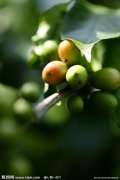
Growth habits and planting techniques of Coffee trees
First, the growth habit of coffee is warm, drought-tolerant, not cold-resistant, afraid of freezing, seedlings and adults are easy to be defoliated to death by frost, and the seeds can not mature. Coffee is not strict on the land, idle land can also be planted, but with good drainage, deep soil, loose and fertile sandy soil is appropriate. Second, seed selection of planting techniques: before sowing, the germination rate of seeds should be tested. Specific method: the full grain

Introduction of Yunnan Coffee Bean varieties with large grains and small grains
Cymes are clustered in leaf axils, each inflorescence has 2-5 flowers, without total pedicel or with very short total pedicel; flowers fragrant, with pedicels 0.5-1 mm long; bracts basally somewhat connate, dimorphic, of which 2 are broadly triangular, nearly equal in length and width, the other 2 lanceolate, twice as long as wide, leaf-shaped; calyx tube-shaped.

How to grow coffee beans? coffee beans are suitable for growing coffee under good conditions.
Professional coffee knowledge exchange more coffee bean information please pay attention to the coffee workshop (Wechat official account cafe_style) front street-coffee planting conditions the ideal planting conditions for coffee trees are: the temperature between 15-25 ℃ temperature climate, and the annual rainfall must reach 1500 to 2000mm, at the same time the rainfall time, to be able to match the flowering cycle of the coffee tree. Except, of course,

Introduction to the planting situation of Arabica Coffee Manor
Arabica coffee trees grow between 900m and 2000 m above sea level; they are hardy, and the suitable growth temperature is 1524 ℃; they need more humidity, and the annual rainfall is not less than 1500 ml. At the same time, they also require higher cultivation techniques and conditions. Arabica coffee beans are mainly grown in South America (except Argentina and parts of Brazil), Central American countries and Africa.